
Backwards Engineering
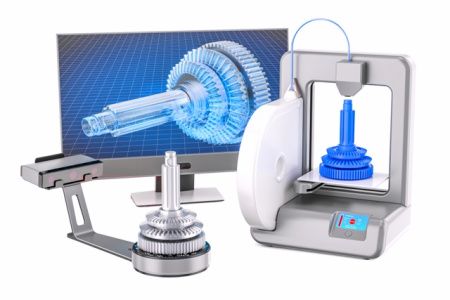
Reverse engineering (backwards engineering or back engineering) of assemblies, products and mechanisms is an area of our specialisation.
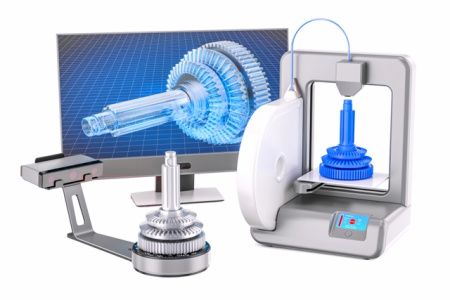
Reversible engineering is the process of making a replica of a product from a finished sample. Reconstruction means a recreation of the design documentation, according to which a similar product can be manufactured in the future.
Reversible engineering is the process of making a replica of a product from a finished sample. Reconstruction means a recreation of the design documentation, according to which a similar product can be manufactured in the future.
Reconstruct products and parts
There is the reverse design of products and the production of a drawing according to a part pattern. Reversing a part is measuring it manually or by 3D scanning, creating a 3D model and designing a drawing.Inverting the product is a creative process that involves understanding technologies, the principle of the mechanism, the use of design intelligence, experience and the ability to connect all parts of the mechanism to achieve the stated characteristics of the product, in addition to inverting all parts of the product.
The cost of reverse engineering depends on the complexity of the product and the availability of the raw data.
Reverse engineering of products without mechanisms
Examples of objects without a mechanism: machine housing, device housing.
Reverse engineering includes the following work steps:
The cost and schedule for development depend not only on the complexity of the product itself, but also and above all on the availability of initial data, detailed terms of reference and information about the technology of the mechanism in question.
If the input data for the development of, for example, a machine tool are only pictures from the internet and a rough idea of the result the mechanism should produce, the development process requires a lot of creativity on the part of the designer, many iterations to achieve the desired result, and the need to produce more than one prototype.
The most realistic option for reverse engineering is the mechanism itself and a technician who knows how it works, problems and how to fix them. Nevertheless, reverse engineering a complex mechanism is practically a redesign, with some relief that some of the technical solutions can be found in the finished product.
Stages of the reverse engineering mechanism:
1. Science intensive
Often entire research institutes have worked on a machine, device or appliance before it came to market, and replicating that technology can require just as much research.
2. A large number of different systems - electric, hydraulic, pneumatic, magnetic, etc.
Each of these systems requires its own specialist, so the work can only be carried out by a team of designers, which has a direct impact on development costs.
3. The accumulation of errors when copying parts.
Inaccuracy occurs even with the most accurate measurement methods. 3D scanning gives an error of about 30-100 microns, manual measurement can give a slightly higher error due to the human factor. With a large number of parts, the inaccuracies accumulate, which ultimately affects the function of the product.
4. Copyright
There is another important factor in reverse engineering - copyright infringement. The copied products usually carry a registered trademark or brand and may contain patented components or know-how technologies. Direct copying can lead to legal problems in the future. Therefore, reverse engineering tries to avoid direct copying and develop new products based on counterparts, incorporating improvements and avoiding patented components.
Reverse engineering includes the following work steps:
- Disassembly of the product is done indirectly using special tools. The manufacturer may protect its products with secret or sealed connections that must be drilled out or opened with a special tool under special conditions (e.g. pressure).
- Determination of the materials to be used. The designer must determine which materials are critical and which can be selected depending on the function of the component. For critical parts, a laboratory examination of the material is carried out.
- 3D scan parts with complex surfaces and create a 3D model.
- Dimensioning of other parts, creation of 3D models.
- Creation of a general assembly, mounting, mounting check.
- Output drawings.
Reverse engineering of mechanisms
From packaging machines to test benches, we develop reverse engineering for devices and mechanisms of varying complexity.The cost and schedule for development depend not only on the complexity of the product itself, but also and above all on the availability of initial data, detailed terms of reference and information about the technology of the mechanism in question.
If the input data for the development of, for example, a machine tool are only pictures from the internet and a rough idea of the result the mechanism should produce, the development process requires a lot of creativity on the part of the designer, many iterations to achieve the desired result, and the need to produce more than one prototype.
The most realistic option for reverse engineering is the mechanism itself and a technician who knows how it works, problems and how to fix them. Nevertheless, reverse engineering a complex mechanism is practically a redesign, with some relief that some of the technical solutions can be found in the finished product.
Stages of the reverse engineering mechanism:
- conceptual design,
- In search of technical solutions,
- 3D simulation based on the pattern,
- Issuance of design documents,
- Herstellung von Prototypen,
- Review and finalise the design quality based on the results (possibly more than once).
Characteristics of mechanisms that influence the complexity of reverse engineering work:
1. Science intensive
Often entire research institutes have worked on a machine, device or appliance before it came to market, and replicating that technology can require just as much research.
2. A large number of different systems - electric, hydraulic, pneumatic, magnetic, etc.
Each of these systems requires its own specialist, so the work can only be carried out by a team of designers, which has a direct impact on development costs.
3. The accumulation of errors when copying parts.
Inaccuracy occurs even with the most accurate measurement methods. 3D scanning gives an error of about 30-100 microns, manual measurement can give a slightly higher error due to the human factor. With a large number of parts, the inaccuracies accumulate, which ultimately affects the function of the product.
4. Copyright
There is another important factor in reverse engineering - copyright infringement. The copied products usually carry a registered trademark or brand and may contain patented components or know-how technologies. Direct copying can lead to legal problems in the future. Therefore, reverse engineering tries to avoid direct copying and develop new products based on counterparts, incorporating improvements and avoiding patented components.
Summary
With a good specification, complete source data, the product itself and an expert who knows their technology, it is possible to quickly reverse engineer a complex product from a prototype.
Discover the world of reverse engineering at Roltec Engineering. Our engineering services offer precise reverse engineering, efficient analysis of components and customised design solutions. With innovative reverse engineering technologies, we focus on future-oriented product optimisation and creative implementation of existing components. Find out more about our expertise in robust mechanical design.