
Packaging unit Nonwoven Line – Design and Development
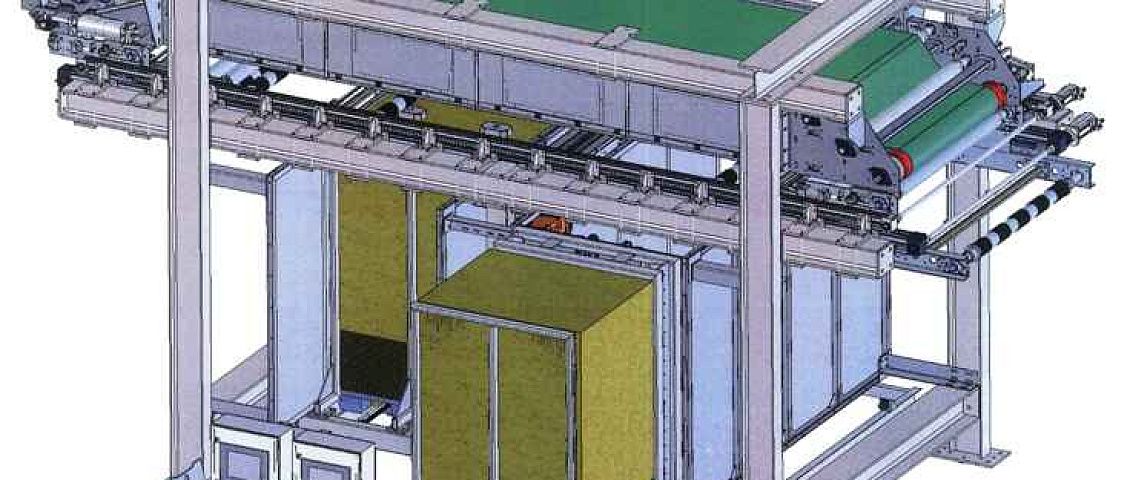
In this project, a packaging unit was developed as part of a large-scale industrial system. The focus was on implementing a new concept for cutting and gluing processes, significantly improving flexibility, automation and overall machine performance.
Initial situation and requirements
Conventional packaging units often rely on a single drive system for multiple functional modules, limiting flexibility and making setup and adjustments more complex. The goal of this project was to redesign the system architecture to enable higher adaptability and efficiency.
Key requirements:
- increased flexibility in machine setup and adjustment
- improved automation level
- reduction of setup time and machine downtime
- reliable and stable operation
- seamless integration into the overall production system
Technical implementation
A new concept was implemented in which separate servo drives were assigned to each functional unit instead of using a single centralized drive. This approach enables independent control of individual processes and significantly enhances system flexibility.
In addition, several mechanical functions were redesigned to simplify operation and improve performance.
Key features of the solution:
- independent servo drives for each functional unit
- flexible adjustment and precise control of machine processes
- redesigned mechanical functions for simplified setup
- improved system availability and reduced downtime
- motion simulation in CAD for optimized development
Thanks to detailed motion simulation during the design phase, the machine was able to be commissioned immediately after assembly without significant additional effort.
Result and added value
The developed packaging unit provides a highly flexible and efficient solution for modern production environments. The combination of servo-driven architecture and optimized mechanical design results in improved performance, reduced downtime and increased operational reliability.
Key benefits:
- high flexibility and precise control of processes
- increased level of automation
- reduced setup time and machine downtime
- faster commissioning due to CAD-based motion simulation
- reliable operation in complex production systems